
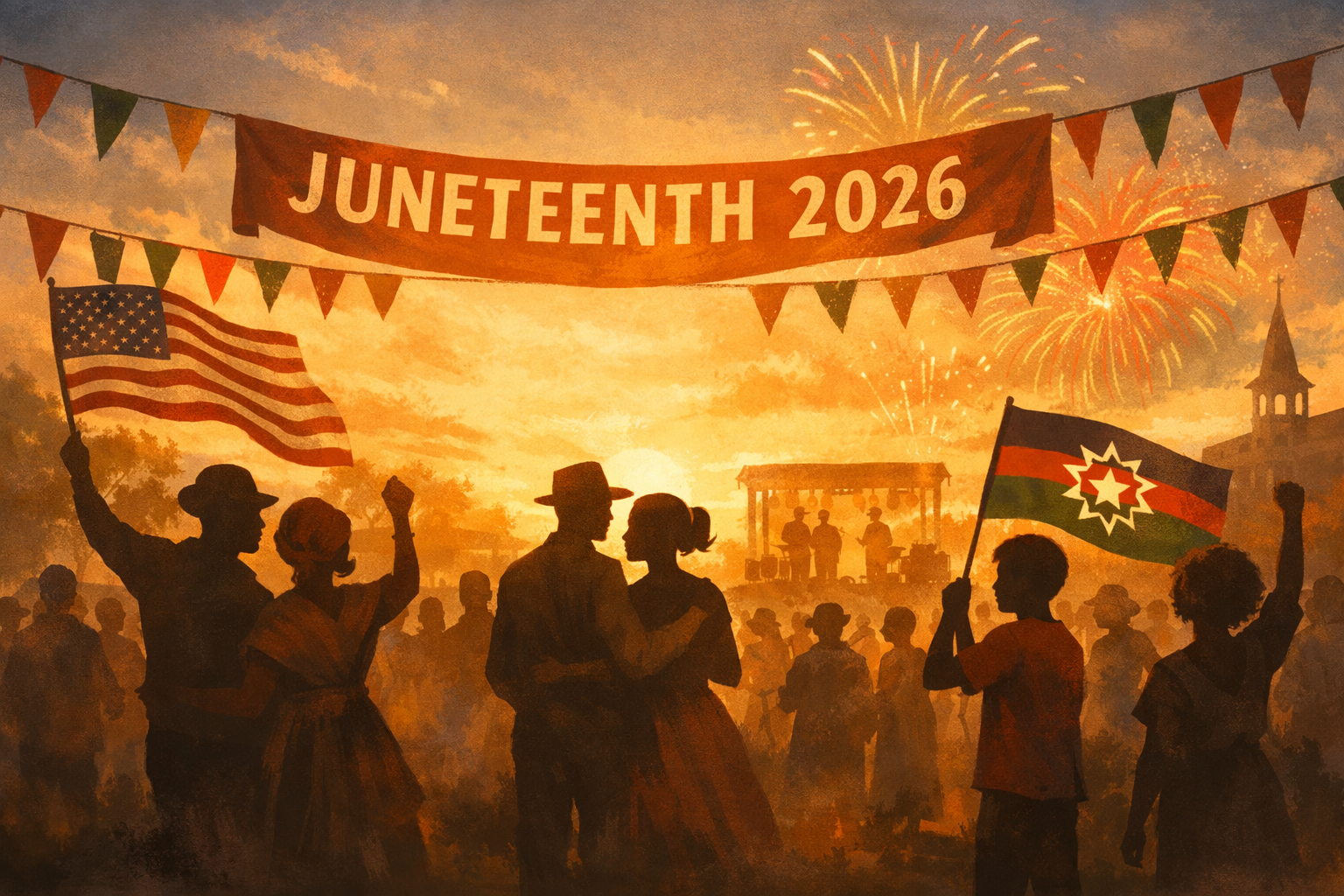
Juneteenth and the Three Regimes of American Policy Toward Black America
Philip Obazee
Juneteenth 2026
Freedom Announced, Freedom Delivered
Juneteenth is not only a celebration of emancipation. It is also a study in institutional delay. The Emancipation Proclamation took effect on January 1, 1863, but enslaved people in Texas did not receive the announcement as enforceable fact until June 19, 1865, when Major General Gordon Granger arrived in Galveston and issued General Order No. 3.
That interval matters. It shows that legal freedom and usable freedom are not identical. A right may exist in constitutional language while remaining inert in ordinary life. The distance between proclamation and enforcement can be filled with violence, local resistance, administrative weakness, political calculation, and social disbelief. Law does not automatically become school access, voting power, property ownership, labor mobility, credit availability, bodily security, or civic standing.
Juneteenth therefore asks a harder question than the ceremonial one. Once freedom has been announced, what kind of policy order makes it operational? How does a society move from legal status to effective citizenship? How does it convert the abstract person of the law into a citizen with usable rights, transferable assets, political voice, institutional trust, and economic capacity?
American policy toward Black America since the civil-rights era can be read through three broad regimes. The first was the civil-rights regime of “We shall overcome.” The second was the Reagan-era regime of “Blame them enough.” The third, emerging with President Trump’s second term in 2025, is the regime of “overcome without preference.”
These are not partisan slogans. They are models of causation. Each regime identifies a different source of Black disadvantage. Each prescribes a different role for the state. Each captures part of the truth. Each becomes false when promoted into a total theory.
The first regime locates the problem in institutional exclusion. The second locates much of the problem in conduct, incentives, and dependency. The third locates the problem in preference, DEI bureaucracy, and the erosion of neutral standards. Their conflict is not only political. It is analytical. They disagree about what produces unequal outcomes, where policy should intervene, and what counts as fairness after centuries of unequal starting positions.
Juneteenth supplies the frame because it reveals the central dilemma: freedom can be declared before the conditions of freedom exist. American racial policy has been fighting over that gap ever since.
I. The Civil-Rights Regime: “We Shall Overcome”
The first regime emerged from the long Black freedom struggle and reached its federal high point in the 1950s and 1960s. Its premise was direct: Black disadvantage was not the natural result of private deficiency. It was produced by slavery, Jim Crow, disfranchisement, racial terror, housing exclusion, labor-market discrimination, segregated schooling, unequal public facilities, and state-tolerated humiliation.
“We shall overcome” was not only a moral aspiration. It was a claim about institutions. Black Americans were not asking America to compensate for incapacity. They were demanding the dismantling of public and private arrangements that blocked citizenship. The regime’s central insight was that agency cannot operate normally when law and power make ordinary action dangerous, costly, or futile.
The policy response followed from that diagnosis. The Civil Rights Act of 1964 attacked discrimination in public accommodations, employment, education, and federally assisted programs. The Voting Rights Act of 1965 confronted the devices that had nullified Black political citizenship. Federal equal-employment rules, housing law, school desegregation, anti-poverty programs, and administrative enforcement extended the same logic into other fields.
The civil-rights regime treated Black advancement as a problem of blocked access. The gate was closed; open it. The ballot was suppressed; protect it. The school was segregated; desegregate it. The employer discriminated; regulate it. The public facility excluded; prohibit exclusion. The state had helped produce the injury; the state had to participate in dismantling it.
The model was powerful because it recognized exclusion as a system. It did not mistake individual Black success for population-level equality. It understood that a few exceptional breakthroughs do not prove that the field is open. A person can overcome a barrier without the barrier ceasing to exist. Jackie Robinson could enter Major League Baseball and segregation could still structure American life. Thurgood Marshall could become a legal giant while Black children still attended inferior schools. A Black mayor could win office while Black neighborhoods remained capital-starved.
The first regime’s strength was its attention to institutions. It understood that law, administration, policing, labor markets, schools, housing, and voting rules shape the probability distribution of life outcomes. It saw that a society can formally praise effort while arranging conditions that lower the return on effort for a targeted group.
But the civil rights regime also contained unresolved issues. Its early clarity came from confronting explicit exclusion. The lunch counter, the poll tax, the segregated school, the discriminatory employer, the white primary, and the restrictive covenant supplied clear objects of struggle. The later phase was less clean. Once formal exclusion was prohibited, the policy question shifted from access to outcomes. That shift created a new problem: how long should corrective policy continue, by what mechanism, and under what standard of success?
This question never received a stable answer. Anti-discrimination enforcement is one thing. Demographic management is another. Equal access is one thing. Institutional pressure for proportional representation is another. Removing barriers is one thing. Using race as an administrative variable in admissions, employment, contracting, and promotion is another. The civil-rights regime did not always keep these distinctions sharp.
Its second difficulty was deeper. Access to an institution does not guarantee the quality of that institution. A Black child may have formal access to school, but if the school is unsafe, intellectually weak, and socially unstable, the legal victory has limited productive value. A Black family may have formal access to housing, but if wealth, credit, appraisal practices, land-use rules, and neighborhood opportunity remain unequal, the open market still carries historical residue. A Black worker may have formal employment rights, but if capital has fled the city and schools fail to produce skills, formal access does not generate mobility at scale.
The first regime was indispensable. Without it, American democracy would have remained openly fraudulent. Yet it left open the hard question of production: after legal barriers fall, what produces capacity?
The Reagan turn entered through that opening.
II. The Reagan Regime: “Blame Them Enough”
The second regime became politically dominant with Ronald Reagan’s ascent in 1980. It did not repeal civil-rights law. It changed the explanatory center of national policy. The question was no longer primarily: what barriers has America imposed? The question became: what behaviors explain continuing failure?
This was the regime of “Blame them enough.”
The phrase is harsh because the shift was harsh. The Reagan-era policy imagination moved attention toward welfare dependency, family breakdown, crime, drugs, weak work attachment, school failure, disorder, and personal responsibility. The state was no longer treated mainly as a necessary instrument for correcting exclusion. It was increasingly described as an engine of perverse incentives.
The welfare debate became the emblem of this change. Public assistance was framed less as support for families under economic stress and more as a system that rewarded non-work, fraud, and family instability. The “welfare queen” image was politically potent because it compressed fiscal resentment, racial anxiety, gender politics, and suspicion of the poor into a single narrative. It allowed the public to imagine welfare not as a response to deprivation but as evidence of manipulation.
Criminal justice policy carried the same logic. Urban disorder and the drug crisis were answered through punishment, mandatory minimums, aggressive policing, and prison expansion. The state’s role shifted from opening doors to imposing control. Black communities experienced this not as an abstract policy adjustment but as a lived reorganization of neighborhood life: incarceration, surveillance, police contact, family disruption, and civic distrust.
This regime had analytical force because behavior does matter. Work matters. Family stability matters. School attendance matters. Crime matters. Social norms matter. Incentives matter. No serious theory of advancement can treat people as passive objects moved only by structures. The Black freedom tradition itself never denied agency. It was full of institution building, churches, schools, mutual-aid societies, businesses, professional associations, military service, civic education, and self-command.
The problem was not that Reaganism introduced behavior into the equation. The problem was that it often converted behavior into the dominant explanation while treating background conditions as secondary. It spoke as if conduct could be interpreted apart from labor markets, schools, policing, credit, housing, neighborhood capital, inherited wealth, and public capacity.
That is the central defect of “Blame them enough.” It takes variables that are jointly determined and assigns causal priority to the most visible conduct of the least powerful actors.
Crime weakens neighborhoods, but neighborhood collapse also raises crime. Welfare can distort incentives, but weak wages and unstable labor markets also make family life harder to sustain. School failure can reflect weak home support, but school failure also produces future instability. Family breakdown can damage children, but incarceration, joblessness, and housing insecurity can damage family formation. Conduct is cause and consequence.
The Reagan regime flattened that feedback structure. It turned recursive systems into accusations.
Still, its political durability came from a weakness in the civil-rights regime. Legal equality had advanced, yet disparities persisted. The Reagan answer was simple: if formal barriers have fallen, continuing failure must be explained by conduct and incentives. That answer was too narrow, but it had rhetorical efficiency. It provided closure where structural analysis often sounded indefinite.
By the 1990s, elements of this framework had entered bipartisan policy. Welfare reform reflected the national settlement around work requirements, time limits, and the suspicion that public assistance could produce dependency. The civil rights state still existed, but it now operated under a political ceiling: remedies had to justify themselves in a climate increasingly hostile to open-ended claims about structure.
The Reagan regime corrected one error and introduced another. It corrected the tendency to discuss Black life as if agency were irrelevant. It introduced the greater error of interpreting constrained agency as if it were unconstrained choice.
III. The Production Problem
The dispute between the first two regimes can be stated as a problem in social production. Black advancement is not produced by one variable. It is a function of several interacting inputs: legal access, enforcement, schooling, family stability, health, labor demand, capital access, neighborhood safety, political power, social networks, incentives, and institutional legitimacy.
The first regime weighted access and enforcement. The second weighted incentives and conduct. The third weights non-preference and legitimacy. Each emphasizes a real margin. None can carry the full explanatory burden.
Structure without agency becomes condescension. Agency without structure becomes accusation. Neutral standards without preparation can reproduce inherited inequality. Preference without standards can damage trust. Enforcement without institutional quality opens doors into weak systems. Data without causal analysis becomes quota pressure. Colorblindness without enforcement becomes camouflage for private exclusion.
The policy problem is therefore not whether structure matters or behavior matters or standards matter. All three matter. The problem is sequencing and instrument choice. Where should policy intervene? At birth? In early childhood? In school finance? In neighborhood safety? In hiring? In college admissions? In contracting? In policing? In credit markets? At the point of selection? Before selection? After discrimination occurs?
The three regimes disagree because they locate the decisive intervention point differently.
The civil-rights regime intervenes at barriers.
The Reagan regime intervenes at behavior and incentives.
The Trump-era regime intervenes at preference and standards.
A serious policy settlement must ask whether these are substitutes or complements. In most cases, they are complements. A child needs protection from discrimination, but also a serious school. A worker needs fair hiring, but also skills that command wages. A neighborhood needs protection from predatory policing, but also protection from predatory crime. A business owner needs non-discriminatory credit, but also collateral, contracts, networks, and managerial competence. A university applicant needs fair assessment, but also years of preparation before the assessment.
The production problem exposes the inadequacy of single cause politics. It also exposes the weakness of symbolic policy. Representation without capability does not build power. Responsibility without opportunity does not build mobility. Neutrality without preparation does not build equality. Preference without credibility does not build legitimacy.
IV. The Trump Regime: “Overcome Without Preference”
The third regime emerged in 2025 with President Trump’s second term. Its defining policy action was the attack on DEI programs, racial preference, and federal equity mandates. The administration moved to end federal DEI programs and revoked Executive Order 11246, the Johnson-era federal-contractor equal-employment framework. Its stated aim was to restore merit-based opportunity and remove illegal discrimination associated with DEI practices.
This regime is best described as “overcome without preference.” It does not use Reagan’s primary idiom of welfare dependency and criminal disorder. Its central terms are merit, neutrality, individual treatment, anti-preference, and institutional fairness. Its adversary is not only the welfare state. Its adversary is the DEI state: offices, trainings, metrics, representational targets, identity classifications, and race-conscious institutional management.
The strongest version of this regime raises serious objections to late-stage racial preference. Preference can impose a legitimacy cost on Black achievement. When an institution openly uses race in selection, it may cast doubt on the qualifications of Black individuals who would have succeeded under any standard. The cost is not borne by abstract groups. It is borne by individuals who must operate under that suspicion. Yet preference does not originate the suspicion. Some of it already shadows Black achievement wherever evaluators judge by group expectation rather than by the person in front of them; preference deepens that doubt and lends it institutional warrant. The cost is real, but it is the worsening of an existing burden, not the creation of a new one.
DEI administration can also become a substitute for actual development. An institution can hire consultants, issue statements, create dashboards, and require trainings while failing to teach, train, invest, hire fairly, or allocate capital. A university can perform inclusion while admitting poorly prepared students into debt producing pathways. A corporation can celebrate diversity while leaving ownership untouched. A public agency can produce equity language while delivering weak services. Bureaucracy can survive on the appearance of correction while the production of capacity remains unchanged.
The third regime also speaks to a legitimate democratic concern. A plural society needs rules that citizens can understand and defend. If public institutions classify people by race in order to distribute opportunities, suspicion spreads. People begin to doubt the standard, the institution, and the selected individual. A republic cannot rely indefinitely on racial sorting and still claim stable equal citizenship.
But the Trump regime has a serious weakness of its own. It can confuse the removal of preference with the creation of opportunity.
A test score is not produced on the day of the test. A résumé is not produced on the day of the interview. A college application is not produced in the senior year of high school. A business plan is not produced when it reaches a loan officer. Selection is the late stage of a long production chain. Before it comes family resources, neighborhood safety, school quality, health, transportation, networks, internships, information, peer effects, teacher expectations, capital, and inherited wealth.
A formally neutral rule at the final stage can coexist with unequal preparation at every previous stage. The rule may be clean; the pipeline may be broken. The selection mechanism may be non-discriminatory; the production mechanism may still be unequal.
That is the central danger of “overcome without preference.” At its best, it protects the dignity of achievement by rejecting racial preference at the point of selection. At its worst, it becomes a polished theory of withdrawal. It says no preference, but says little about school failure. It attacks DEI offices, but does not build serious preparation systems. It defends standards, but does not ask whether children are being equipped to meet them. It invokes merit, but treats merit as if it arrives fully formed.
The distinction between preference and preparation is crucial.
Preference changes allocation. Preparation changes capacity.
Preference acts at the point of selection. Preparation acts before it.
Preference can deepen suspicion. Preparation builds competence.
Preference can only help those who reach the gate. Preparation also reaches those who never do.
Preference is politically unstable. Preparation is developmentally sound.
The third regime becomes analytically serious only if “overcome without preference” means non-preferential selection combined with aggressive preparation. If it means non-preferential selection without preparation, it is not a civil rights theory. It is final stage neutrality applied to unequal production.
V. What Each Regime Sees and Misses
The civil rights regime sees exclusion. It understands that law, violence, administration, housing, schools, and labor markets can block citizenship. It misses the point when it assumes that access alone creates capacity or when it slides from barrier removal into representational management.
The Reagan regime sees agency. It understands that incentives, family stability, work, crime, and conduct affect outcomes. It misses the point when it treats behavior as self-generated and discounts the institutions that shape the return to responsible action.
The Trump regime sees legitimacy. It understands that preference can undermine trust in standards and impose a reputational burden on Black achievement. It misses the point when it treats the abolition of preference as if it solves the unequal preparation of citizens before competition.
The deeper failure is common to all three. Each identifies a real variable and then risks mistaking that variable for the full system.
Exclusion is real, but not total.
Agency is real, but not unconditioned.
Preference is problematic, but its removal is not enough.
A society that moves from one partial theory to another will oscillate between correction and backlash. It will build civil rights bureaucracy, then resent the bureaucracy. It will demand responsibility, then ignore constraints. It will attack preference, then leave preparation weak. It will proclaim neutrality, then wonder why unequal outcomes persist. It will rediscover structure, then rebuild bureaucracy. The cycle repeats because the underlying production problem remains untreated.
Juneteenth warns against this pattern. Freedom announced did not equal freedom delivered. By the same logic, rights enacted do not equal capacity built. Responsibility demanded does not equal opportunity supplied. Preference removed does not equal fairness achieved.
VI. Toward a Fourth Settlement
A stronger policy settlement would not enthrone any of the three regimes. It would take what each sees and reject what each distorts.
First, anti-discrimination enforcement must remain firm. “Without preference” cannot mean tolerance for exclusion. Employers, lenders, landlords, schools, licensing bodies, public agencies, unions, and contractors can discriminate through formal rules or informal networks. Equal treatment has no force without investigation, evidence, and sanction.
Second, final selection should be standard-based. Admissions, hiring, promotion, contracting, licensing, procurement, and appointments should use criteria that can be defended. Weak criteria should be revised. Artificial barriers should be removed. Real standards should be maintained. Black achievement is strengthened, not weakened, by credible standards.
Third, policy must move upstream. The central battleground is not the last-minute admissions file or the final hiring round. It is early literacy, numeracy, school order, teacher quality, health, nutrition, safety, transportation, apprenticeships, career exposure, credit access, and business formation. A society obsessed with preference at age eighteen while tolerating weak instruction at age eight is not serious about equal opportunity.
Fourth, disparity analysis must be separated from quota logic. Disparities can signal discrimination, unequal preparation, geographic concentration, measurement error, capital gaps, or network exclusion. They are evidence, not verdict. The correct response is causal investigation. The wrong response is automatic proportional allocation.
Fifth, wealth creation must move to the center. Representation in elite spaces is not enough. Black advancement requires ownership: homes, businesses, savings, land, professional equity, retirement assets, intellectual property, and intergenerational transfer. Visibility without ownership is fragile power.
Sixth, public safety must be treated as developmental infrastructure. Violence destroys learning, enterprise, family stability, and trust. A child cannot study normally under threat. A business cannot grow in disorder. A neighborhood cannot accumulate capital where predation dominates. Safety is one of the operating conditions of freedom.
Seventh, policy must distinguish racial condescension from racial seriousness. Black Americans do not need a state that assumes permanent incapacity. They also do not need a state that declares the contest fair while ignoring how capacity is produced. The correct standard is not preference or abandonment. It is preparation under enforceable fairness.
This fourth settlement would be unsatisfying to ideological purists. It would reject the activist habit of treating disparity as automatic proof of discrimination. It would reject the conservative habit of treating neutral rules as sufficient after unequal preparation. It would reject institutional DEI when it substitutes representation for competence. It would reject anti-DEI politics when it substitutes resentment for investment.
That is precisely why it is stronger.
VII. The Juneteenth Test
Juneteenth began with delayed enforcement. Its continuing relevance lies in that fact. Freedom was announced before it was delivered. Citizenship was promised before it was protected. Civil rights were enacted before equal capacity was produced. Responsibility was demanded before opportunity was evenly supplied. Non-preference is now asserted before the country has built a credible preparation system for all its citizens.
The three regimes answer three different failures.
“We shall overcome” answered exclusion.
“Blame them enough” answered the problem of agency, incentives, and social disorder.
“Overcome without preference” answers the legitimacy crisis created by preference and identity administration.
None is enough.
The first can become bureaucracy.
The second can become accusation.
The third can become withdrawal.
A serious post-Juneteenth policy order must do more than rotate among these errors. It must enforce rights, preserve standards, build capacity early, secure communities, expand ownership, investigate disparities carefully, and remove both artificial barriers and artificial preferences.
The question is not whether Black America can overcome. That question has been answered repeatedly under conditions far worse than the present. The real question is whether America can design institutions that neither patronize nor pathologize Black citizens, neither sort them through preference nor strand them under thin neutrality.
Freedom announced was not enough in 1863. Freedom delivered was not enough in 1865. Civil-rights law was not enough in the 1960s. Responsibility politics was not enough in the Reagan years. Non-preference will not be enough after 2025.
The next standard must be harder: enforceable rights, serious preparation, credible standards, safe neighborhoods, capital formation, and achievement that requires neither apology nor administrative sponsorship. That is the unfinished policy meaning of Juneteenth.
_____
Philip Obazee retired as a managing director and head of derivatives from Macquarie Asset Management - a global asset management company with an office in Philadelphia, PA, USA, and currently, he is the founder and chief executive officer of Polymetrics Americas Research.
RETURN


AI Can Cross Disciplines. It Still Can’t Replace Expert Judgmentfirst published on Substack on April 28, 2026Large language models (LLMs) have becom...
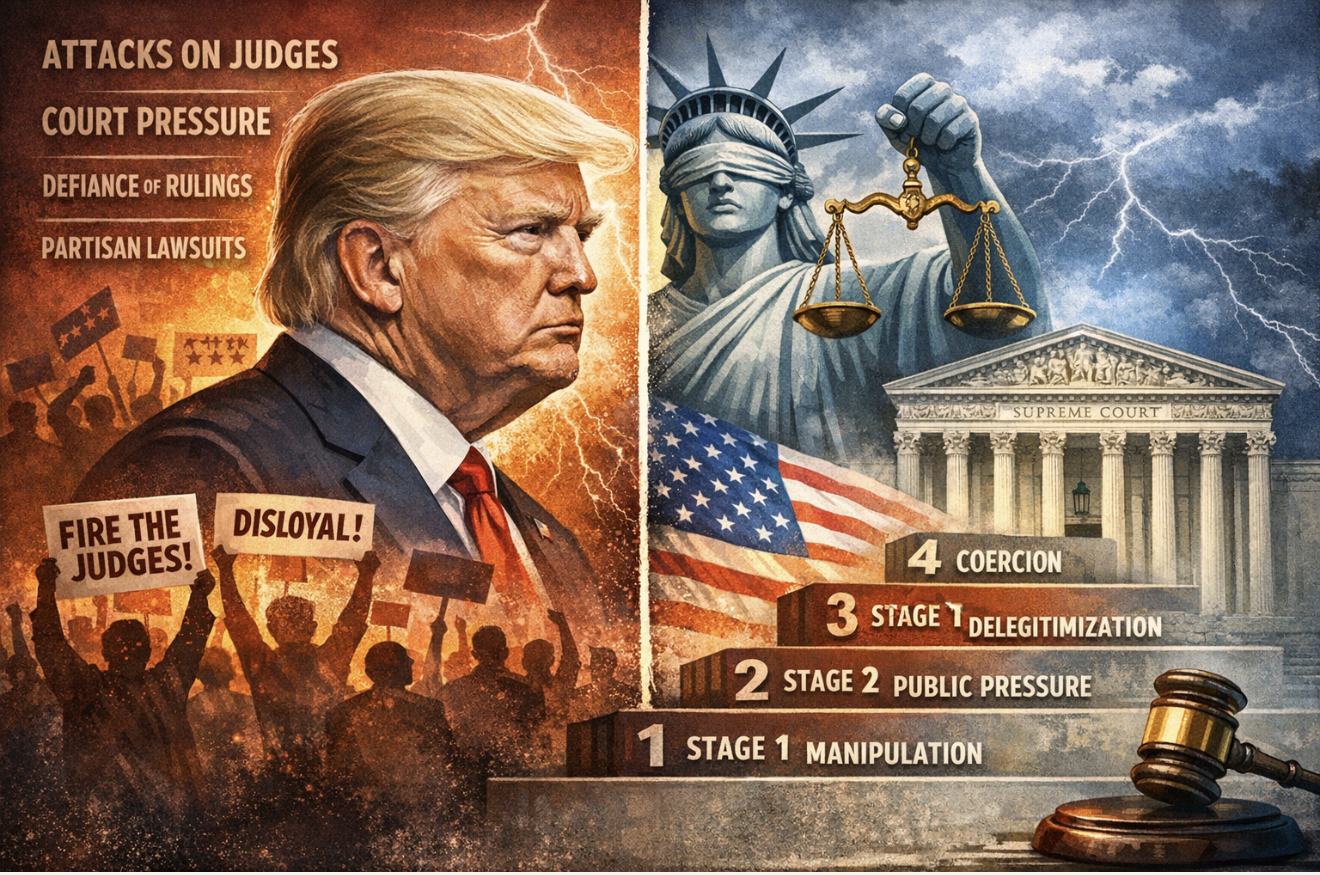
Intimidating The Judiciary: Trump and A Global History of Executive Pressure on Supreme Courts- From Washington to Berlin to Budapest, and the warning...
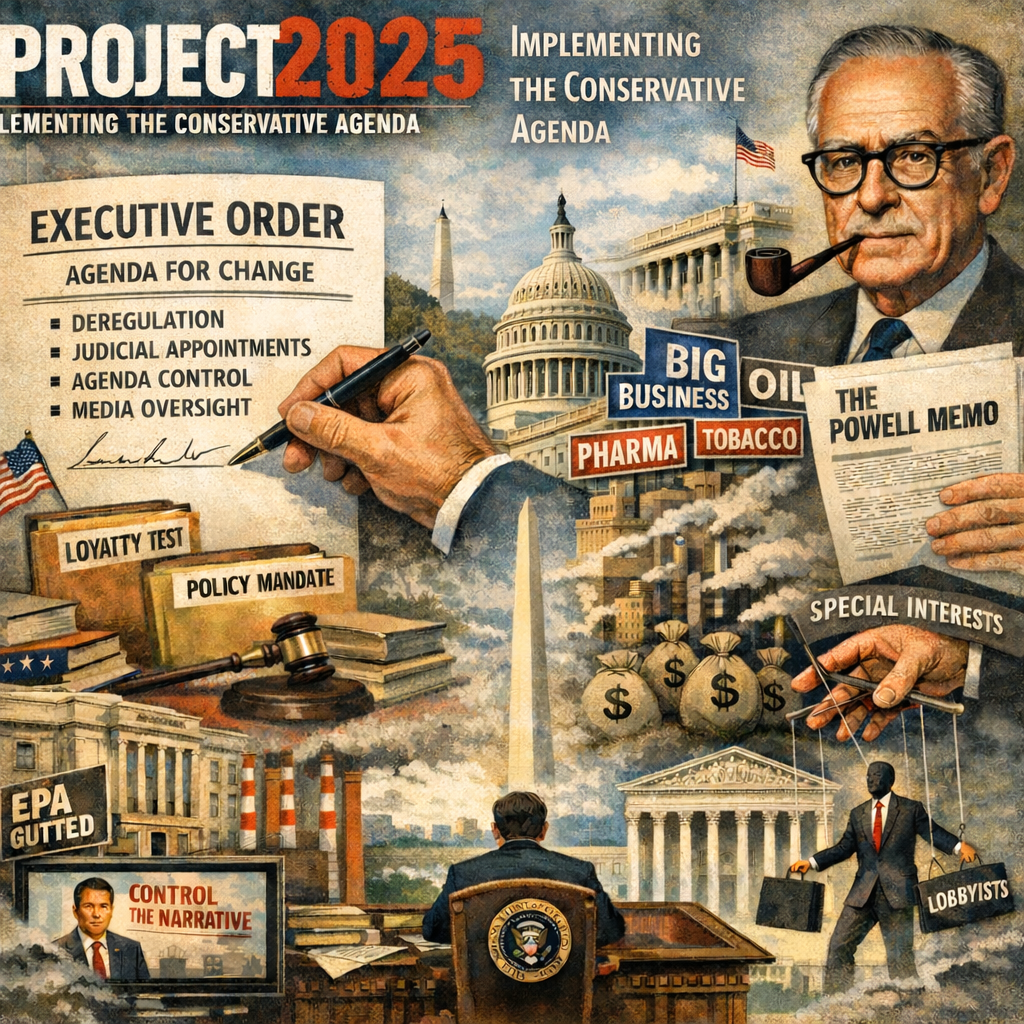
From the Powell Memo to Project 2025: How a 1971 Corporate Strategy Became a Global Template for PowerIn August 1971, a corporate lawyer named Lewis P...

The Market’s Mood Ring: How Volatility Across Assets Traces a Hidden Geometry of SentimentIf you want a fast, honest way to describe modern markets,...

Nigeria’s grid collapses are not ‘bad luck’ – They are a design failure, and we know how to fix themFirst published in VANGUARD on February 3,...




General / Sep 09, 2004
419: The Death of a Nation’s Aspirations and the Corruption of her ReputationSocial & Political Issues / May 16, 2006
3rd Term Funeral - Give Us Step By Step Middle Class Revival PlanSocial & Political Issues / May 16, 2006
375 Days To Go: A Case Study Of President Obasanjo© 2026 Segun Toyin Dawodu | All rights reserved